 Garden Surveyor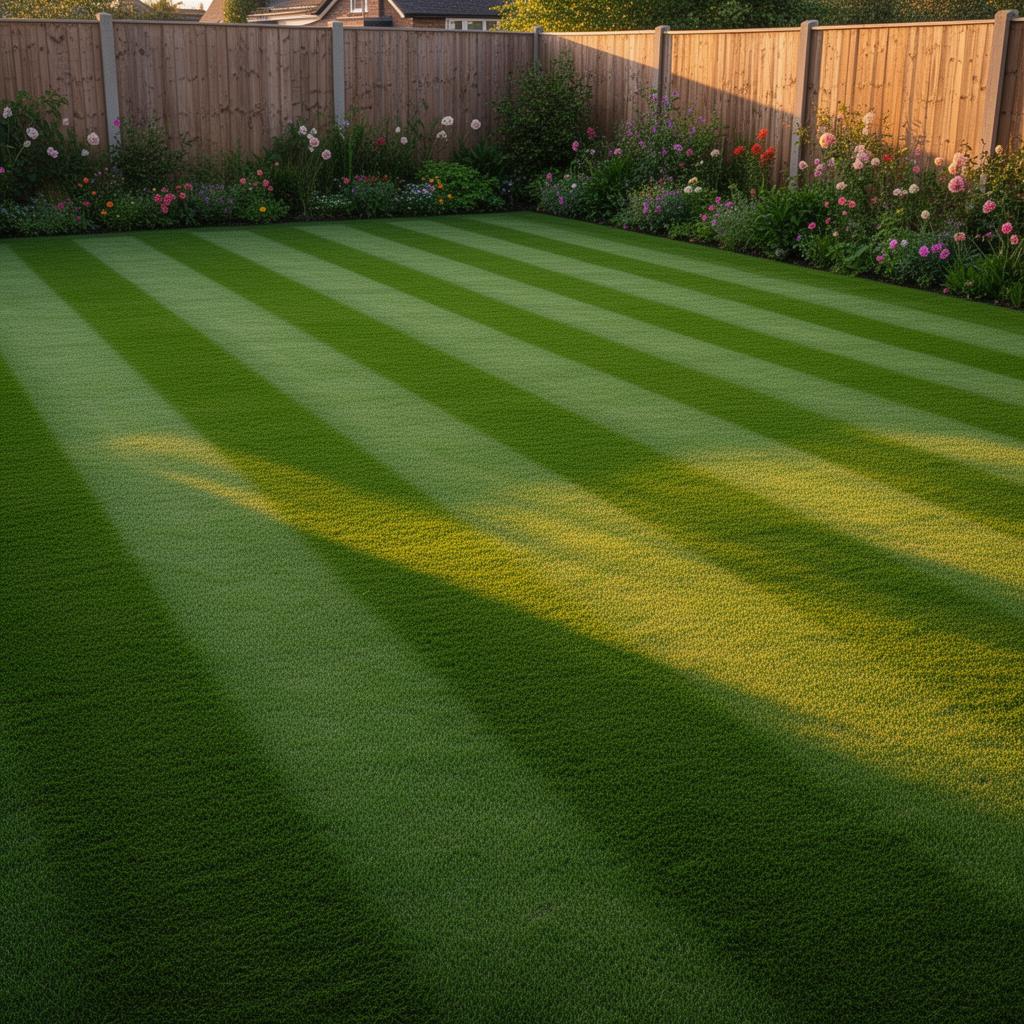
Lawn stripes: the quick version
Those professional stripes you see on cricket squares and football pitches aren't two kinds of grass, they're light reflecting off blades bent in different directions. A roller behind the mower presses the grass flat as you walk; mow up and down in opposite directions and you get alternating pale and dark bands. Get the grass healthy, fit a roller, mow straight lines in alternating directions, and you can have a striped lawn this weekend. Master that and the same trick gives you checkerboards, diamonds and waves.
Starting from scratch or patching bare patches?
Stripes only look good on healthy, dense turf. If your lawn is thin, patchy or you're laying a new one, follow our step-by-step turf guide first: ground prep, laying rolls, watering and aftercare, so you have a surface worth striping.
How to lay turf: full UK guideHow stripes actually work
It's pure optics. When grass blades lean away from you, you see the broad, flat side of each blade: it reflects more light and looks light and silvery. When blades lean towards you, you see the tips, which absorb more light and look dark green. Mow one pass in each direction and neighbouring strips lean opposite ways, instant contrast. The exact same lawn looks completely different from the other end of the garden, because the light and dark swap over.
That's why the roller does the striping, not the blade. The cut only tidies the height; the roller is what bends and holds the grass over. Longer grass, low-angle sunlight and a healthy, dense sward all deepen the effect.
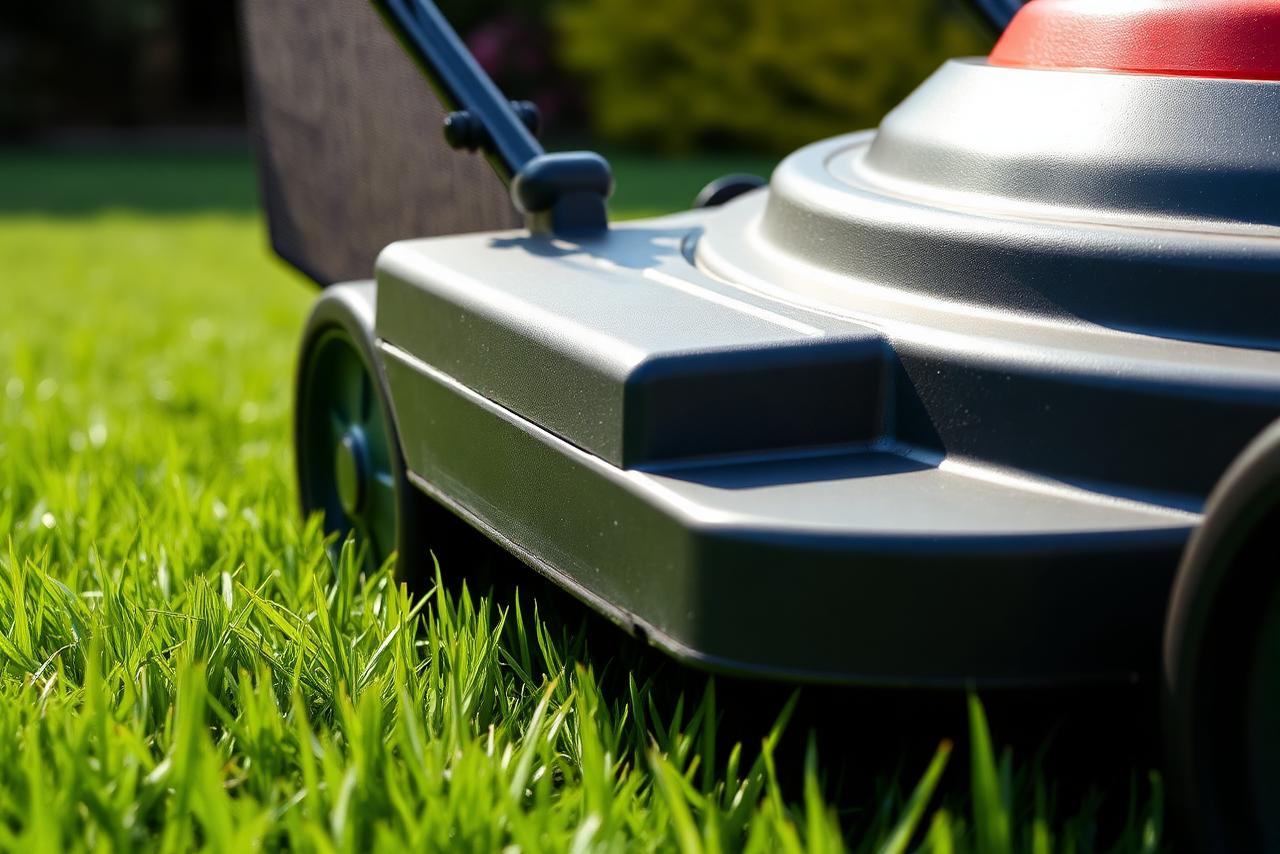
What actually makes the difference between faint marks and bowling-green stripes. Partner links — we may earn a small commission if you buy, at no cost to you.
- Roller lawnmowerA rear roller is what bends the grass to make the light/dark contrast — the single biggest upgrade for stripes.
- Lawn striping roller / kitBolt-on roller for mowers without one — lets any mower lay down stripes and patterns.
- Lawn feed / fertiliserThick, healthy, deep-green grass holds a sharper contrast than thin, stressed turf.
- Half-moon edgerCrisp, defined edges frame the pattern and make the whole lawn look professional.
Step by step: your first stripes
- 1
Get the grass right first
Stripes show best on healthy, reasonably long grass cut at 25–40 mm. Feed it, water it in dry spells and let it thicken, thin, stressed or scalped grass can't bend enough to hold contrast.
- 2
Sharpen the blade
A clean cut keeps tips intact so they reflect light evenly. A dull blade shreds the tips, giving a brown, blurry stripe.
- 3
Pick a straight reference line
Choose your longest straight edge, a patio, path, fence or border, and make the first pass dead straight along it. Fix your eyes 3–4 m ahead, not at the front of the mower, to walk a true line.
- 4
Mow back the opposite way
At the end of the pass, turn and come straight back alongside the first run, overlapping the wheel track slightly so there are no missed strips. Each pass leans the grass the opposite way to its neighbour, that's the stripe.
- 5
Keep passes parallel
Line each new pass against the previous one. Consistent overlap is what makes the bands even and removes 'steps' or gaps.
- 6
Finish with a clean-up lap
Mow one tidy lap around the whole perimeter to square off the stripe ends and hide the turning marks. Define the edges with a half-moon edger for the full bowling-green look.
Pattern library
Once you can mow a straight stripe, every pattern is just a combination of passes in different directions. Tap a pattern below to see how the passes lay out, then build up from simple to advanced.
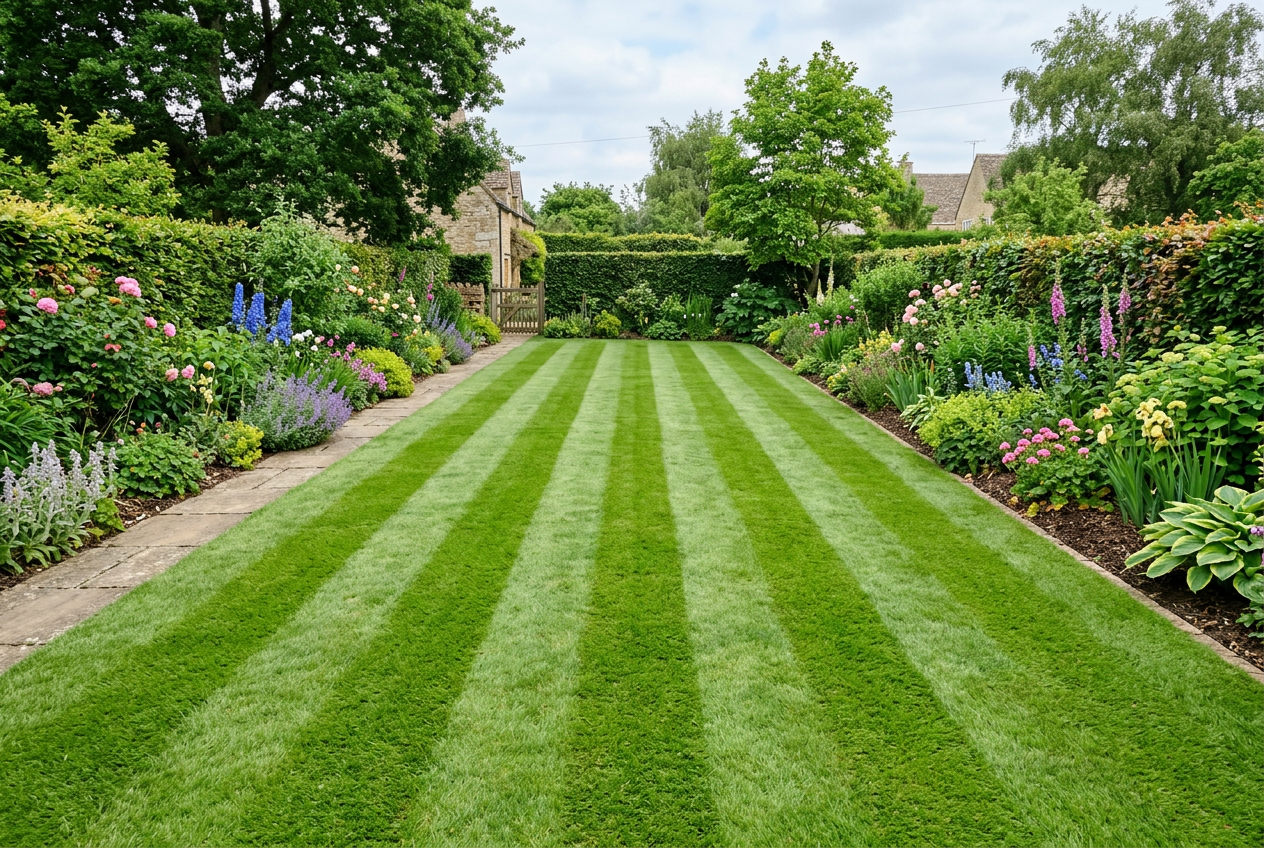
Classic stripes
Mow straight up and down in alternating directions. The simplest, sharpest look — best run lengthways down the garden so the eye follows the longest line.
How to get stripes without a roller or striping kit
No rear roller? You can still get lines in the lawn, they'll just be fainter and shorter-lived because something has to press the grass flat. The trick is to add your own weight behind the mower, or to drag a flat object along each pass:
- Bolt-on striping roller. The cheapest proper fix, a striping kit or roller attachment that fits most push and ride-on mowers and drags behind the deck.
- DIY striping kit. Fill a length of plastic drainpipe with sand, cap the ends and bolt or strap it across the back of the mower. It's a budget version of a shop-bought striper and works surprisingly well.
- Drag a mat or board. A heavy rubber doormat, a squeegee, or a board on a rope pulled along each finished pass bends the blades flat in that direction.
- Use a separate garden roller. Mow first, then roll each stripe in alternating directions with a water- or sand-filled garden roller.
A quick note on robot mowers: most cut a little at a time on random paths, so they don't stripe. A few newer models mow in straight lines and take an optional striping roller, but for crisp bands a rear-roller or cylinder mower still wins. Browse robot mowers on Amazon.
Pro tips for bowling-green stripes
- Mow in low light. Early morning or evening sun rakes across the lawn and exaggerates the contrast; flat midday light washes stripes out.
- Run stripes down the longest axis. Lengthways stripes make a garden look longer and more formal.
- Double stripe for depth. Going over the finished stripes a second time with the roller in the same direction (mower off the blades, or a separate roller), known as double striping, deepens the contrast noticeably.
- Keep it fed and watered. Lush, upright grass bends and reflects far better than dry, patchy turf, a fed lawn simply stripes harder.
- Best on cool-season grasses. UK fescue and ryegrass lawns stripe beautifully; coarse, wiry grasses hold a stripe less well.
Common mistakes & how to avoid them
Cutting too short
Why it fails: Very short grass can't bend, so there's almost nothing to catch the light and the contrast disappears.
How to avoid it: Raise the cut to 25–40 mm. Longer blades lean further and reflect more light, giving bolder stripes.
No roller (or no striping kit)
Why it fails: Without something pressing the grass flat behind the blades, stripes are faint and vanish within a day.
How to avoid it: Use a rear-roller mower or fit a bolt-on striping roller. The roller does the actual striping, not the blade.
Wavy, uneven lines
Why it fails: Watching the front of the mower makes you drift; inconsistent overlap leaves steps and gaps.
How to avoid it: Lock onto a straight edge for the first pass, look well ahead, and line each pass against the last.
Same direction every cut
Why it fails: Always mowing identical lines compacts wheel tracks and makes grass lean permanently, causing ruts and wear.
How to avoid it: Change the mowing axis every few cuts. It keeps growth upright and lets you rotate between patterns.
Partner links for the roller mowers, striping kits, feed and edging tools used in this guide, we may earn a small commission if you buy, at no cost to you.
- Sharp sand — bulk bagsBuilding Materials Nationwide
Screed/bedding sand for slab beds and block-paving courses.
- Horticultural grit 10 mm — bulk bagBuilding Materials Nationwide
Fine grit for soil conditioning, mulching and potting mixes.
- Medallion turf — hard-wearing family lawnRolawn
High-ryegrass mix for kids, pets and general use. UK-grown, harvested to order.
- Ornamental fine lawn turf — fescue & bentTurf Online
Fine-leaved fescue/browntop bent blend for a close-cut, bowling-green finish.
- Shade-tolerant turfTurf Online
Species blended for north-facing and shaded gardens where standard turf struggles.
- Beautiful Borders / Blended Loam topsoilRolawn
Screened BS3882-compliant topsoil in 1 t bulk bags.
- Garden plants — perennials, shrubs & grassesCrocus
RHS-grade nursery stock in P9–2 L pots — matched to your planting plan.
- Plug plants & garden-ready plantsGardening Express
Bedding, perennials and climbers by the tray — good value for larger schemes.
Frequently asked questions
- How do lawn stripes work?
- Stripes are an optical illusion, not two colours of grass. A roller behind the mower bends the grass blades flat in the direction you walk. Blades leaning away from you reflect more light and look pale and silvery; blades leaning towards you look dark green. Mow in opposite directions on each pass and you get alternating light and dark bands.
- Do I need a special mower to stripe a lawn?
- You need a rear roller. Cylinder mowers and many rear-roller rotary mowers have one built in. If your mower doesn't, you can fit a bolt-on striping roller or striping kit that drags behind it. Without any roller you'll get only a faint, short-lived stripe because nothing is pressing the grass flat.
- Why are my stripes faint or not showing?
- Common causes are cutting too short (longer grass, around 25–40 mm, bends and shows contrast far better than very short grass), thin or stressed turf, no roller on the mower, dull blades that tear rather than cut, or mowing in flat midday light. Feed and water the lawn, raise the cut, sharpen the blade and mow when the sun is low.
- What direction should I mow my stripes?
- Pick a long, straight reference edge, a path, fence or patio, and make your first pass dead straight along it. Then turn and mow back the opposite way right alongside it, overlapping slightly. Keep alternating. To freshen or change the pattern, mow a different axis next time; changing direction regularly also stops the grass leaning permanently and developing ruts.
- How do I make a checkerboard or diamond pattern?
- Mow the whole lawn in straight stripes one way, then mow it again at 90 degrees for a checkerboard, or at 45 degrees for diamonds. The second set of passes presses some areas the opposite way, creating the cross-hatch. Always finish with a clean-up pass around the perimeter to tidy the ends.
- Are stripes bad for the grass?
- No, striping is purely cosmetic and the grass springs back. The only thing to watch is mowing the same lines in the same direction every single time, which can compact wheel tracks and make grass lean permanently. Vary the direction every few cuts to keep growth upright and even.
- How do I stripe a lawn without a roller or striping kit?
- You can get faint, short-lived lines by mowing in alternating directions even without a roller, because the wheels and deck press the grass slightly. For a stronger effect, drag a weighted object, a length of pipe, a garden roller, a rubber doormat or a board on a rope, behind you along each pass, or make a cheap DIY striping kit by bolting a section of plastic drainpipe filled with sand to the back of the mower. A purpose-made striping roller still gives the cleanest result.
- Can robot lawn mowers do stripes?
- Most robot mowers cut a little at a time on random or zig-zag paths, so they don't create traditional stripes. A few newer models mow in systematic straight lines and some have optional striping rollers, which can produce light stripes, but for crisp bowling-green bands you'll still get the best result from a rear-roller or cylinder mower.
- How do I double stripe a lawn?
- Double striping means mowing each stripe, then going back over the same lines a second time with the roller (or the mower deck raised off the cut) in the same direction. The extra pass bends the blades flatter and deepens the contrast, giving the bold, dark-and-light look you see on sports pitches.
- Can you stripe artificial grass?
- Not in the traditional sense. Stripes rely on bending living grass blades so they reflect light differently, and synthetic pile springs straight back, so a roller won't leave lasting bands. Some premium artificial grasses are made with two-tone fibres that mimic a striped look, and brushing the pile in different directions gives a faint, temporary effect, but you can't mow stripes into a fake lawn. If you want the no-mow option instead, see our guide on how to lay artificial grass.
Ad · Some links are sponsored. We may earn a small commission at no extra cost to you. Suppliers are chosen for fit, not commission.