 Garden Surveyor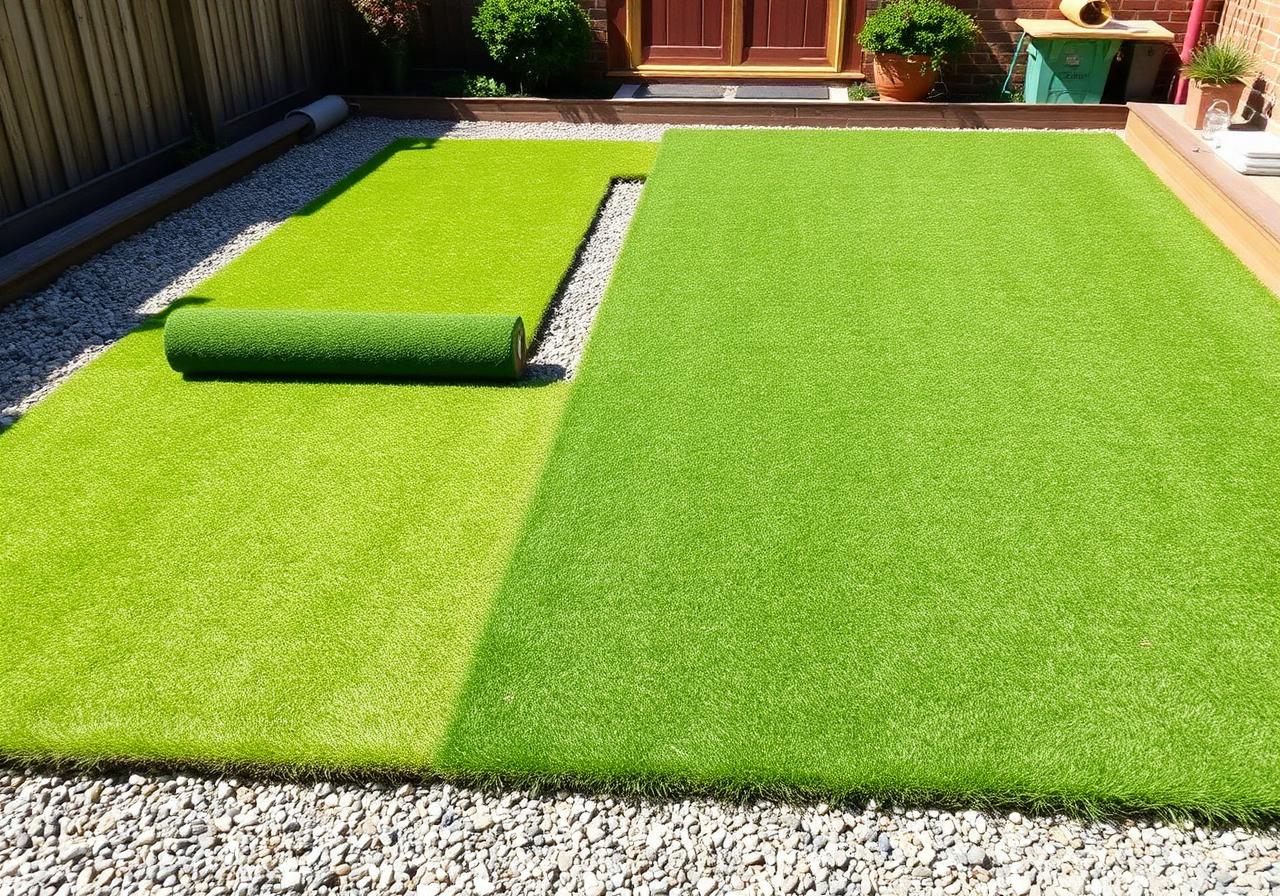
Laying artificial grass: the quick version
Artificial grass: also called fake turf, false turf or astro turf: gives an all-year-round green lawn with no mowing, watering or mud. The whole job comes down to three things: a firm, free-draining and dead-level base; rolls laid with the pile all facing the same way and joined invisibly; and a brushed-in sand infill that keeps the fibres upright. Get the base right and everything else is straightforward. This guide covers whether you can lay over existing grass, soil, concrete or slabs, how to build the base, and the full step-by-step laying, joining, pinning and infill process.
Can you lay artificial grass on existing grass?
It is tempting to roll fake turf straight onto a tired lawn, but it almost always fails. The real grass keeps trying to grow then dies and rots into a spongy, uneven layer that holds water, harbours pests, and lets weeds push up through the seams. Without a firm base the surface ripples, develops dips and feels soft underfoot. Roll-on-grass is only ever a short-term cosmetic fix.
For a lawn that lasts 15–20 years, lay it on a proper base instead:
- On soil or existing grass: strip the turf, excavate 50–75 mm and build a compacted aggregate base (see below).
- On concrete or slabs: if sound and free-draining, lay a foam shockpad onto the surface and stick the grass at the edges, no excavation needed.
- On decking: fit a board or shockpad over the gaps first so the pile doesn't sink into the slats.
The base build-up
A free-draining, fully compacted and level base is 90% of a good artificial lawn. From the ground up, a typical UK build-up is:
| Layer | Spec |
|---|---|
| Edge restraint | Timber, composite or metal edging pinned around the perimeter |
| Weed membrane | Geotextile under the aggregate (and over clay) |
| Sub-base | 50–75 mm MOT Type 1 (heavy use) or grano dust (light use), compacted |
| Blinding / laying course | 25–40 mm sharp sand or grano dust, raked dead level |
| Artificial grass | Pile facing the viewpoint, joined, pinned and infilled |
On clay or poor-draining ground, add a second geotextile membrane between the subgrade and the aggregate to stop fines pumping up, and make sure the base falls slightly (about 1:80) towards a soakaway or border so water drains away. For the right sub-base depths and compaction, see our sub-base specifications guide.
How to lay artificial grass: step by step
- Strip the existing grass and excavate the area 50–75 mm below your finished level. Fix a solid edge restraint (timber, composite or metal edging) right around the perimeter so the grass has something to pin to.
- Lay a weed-control membrane across the excavation, lapping joints by 100 mm and turning it up at the edges.
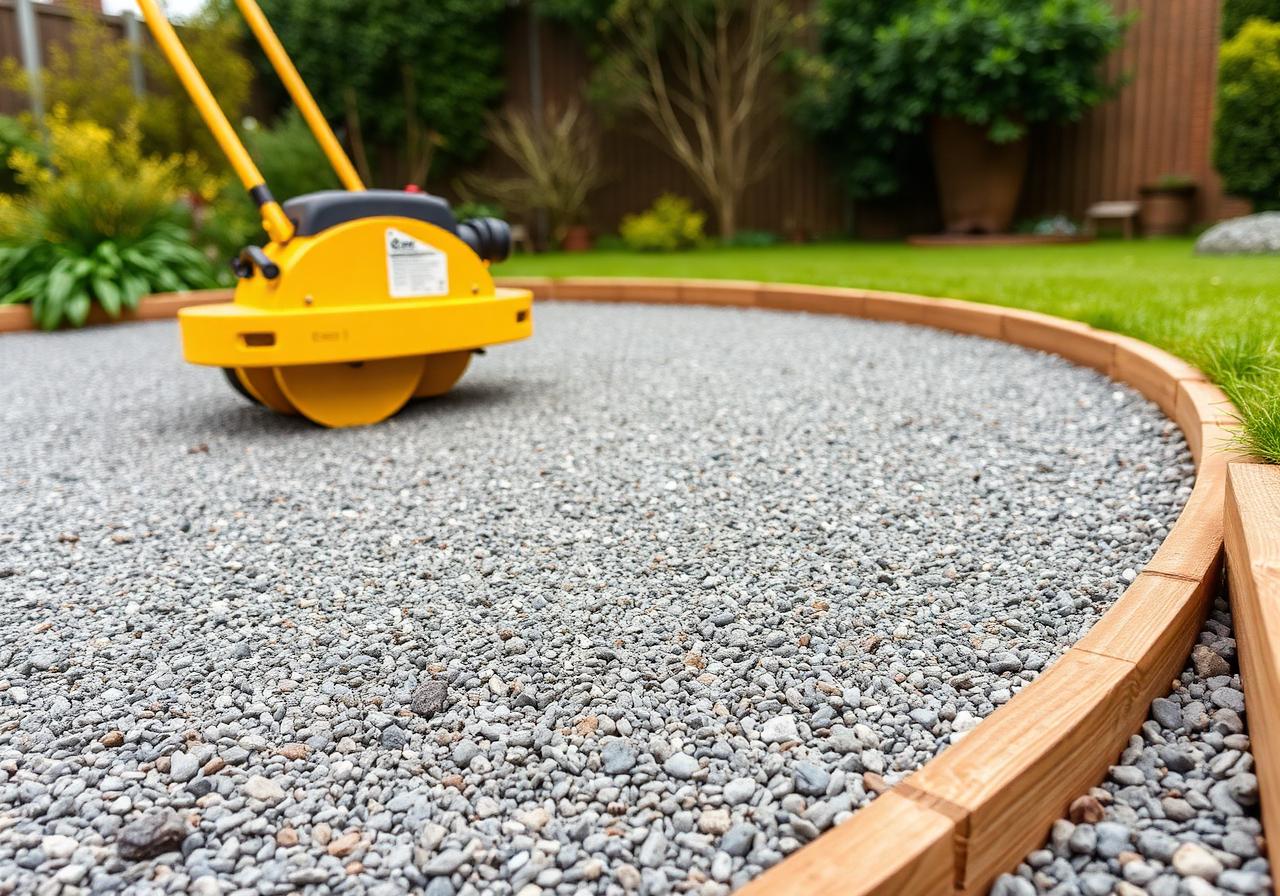
- Spread and compact the sub-base, MOT Type 1 for heavy use or grano dust for light lawns, in layers with a vibrating plate (whacker).
- Add a 25–40 mm blinding layer of sharp sand or grano dust and rake it dead level, then compact again. Check across it with a long straight-edge and fill any dips.
- Roll the grass out with the pile all leaning the same way (towards the main viewpoint) and leave it to settle in the sun for a few hours so creases drop out.
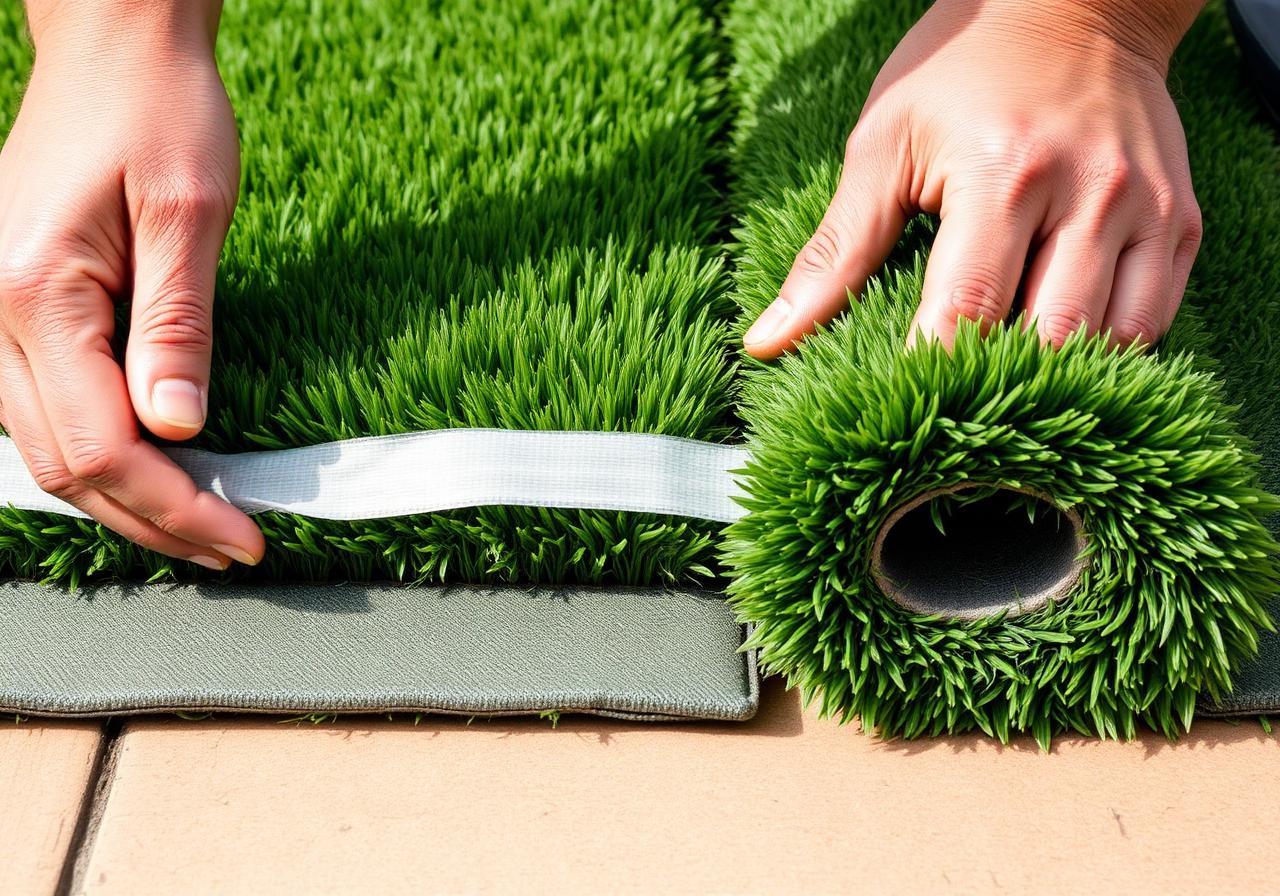
- Butt neighbouring rolls tightly together over joining tape (shiny side down) and bond with outdoor adhesive, keeping the pile clear of the glue. Weigh the join down until cured.
- Trim the edges to the restraint with a sharp Stanley knife, cutting from the backing side for a clean line.
- Fix the perimeter and joins with galvanised U-pins or ground staples every 150–200 mm, keeping pins flush so they vanish into the pile.
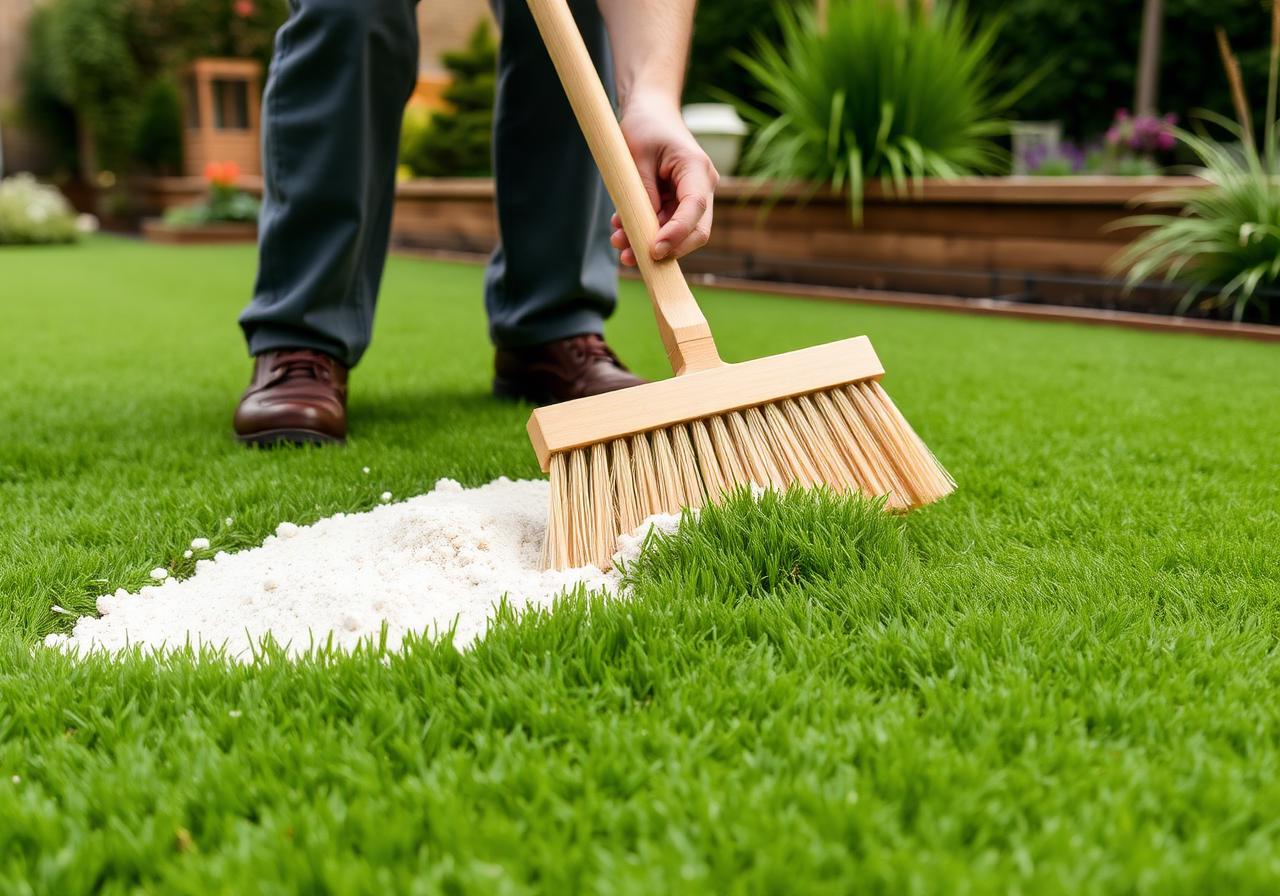
- Brush in a kiln-dried silica sand infill (or zeolite for pets) a little at a time, then power-brush or stiff-brush the pile upright against the lay direction.
Joining rolls invisibly
Joins are where a DIY install gives itself away, so they are worth taking time over.
- Match the pile direction across the join, a mismatch reads as a permanent light-and-dark stripe.
- Trim off the manufactured edge (the first stitch row) on both pieces so two fresh edges butt cleanly together with no gap and no overlap.
- Keep the pile out of the adhesive, fold the edges back, apply glue to the tape, then lay the backing down and tease the fibres up over the seam.
- Weigh it down with boards or bags until the adhesive cures, and brush across the join afterwards to blend the pile.
How much artificial grass and base do I need?
Artificial grass comes in fixed roll widths: commonly 2 m and 4 m: so order enough lineal metres to cover your shape with the pile running one way and the fewest joins, plus a cutting allowance. For the base, allow 50–75 mm of sub-base plus a 25–40 mm blinding layer. The artificial grass calculator turns your measurements into rolls, aggregate tonnage, membrane, tape, adhesive, pins and infill in one go.
Common mistakes & how to avoid them
Laying straight onto soil or grass
Without a compacted base the lawn ripples, dips and stays soft, and weeds grow through. Always excavate and build a proper aggregate base.
Mismatched pile direction
Laying rolls with the pile facing different ways makes joins show as obvious colour bands. Check and mark the pile direction before cutting.
A base that doesn't drain
Compacted fines with no fall trap water and smell. Use a free-draining aggregate, build in a slight fall and add a geotextile over clay.
Skipping the infill or letting it crease
Grass laid without settling keeps its roll creases, and skipping sand infill lets the pile flatten. Let it relax in the sun, then brush in sand to weigh it down and stand the fibres up.
Partner links for the artificial grass, sub-base aggregates, membrane, joining tape, adhesive, pins and infill used in this guide, we may earn a small commission if you buy, at no cost to you.
Frequently asked questions
- Can you lay artificial grass on top of existing grass?
- Not directly for a lasting finish. You can roll fake turf straight onto a flat, healthy lawn as a very temporary fix, but the real grass keeps growing, dies and rots into a spongy uneven layer, holds water, and lets weeds push through. For a proper job, strip the existing grass, excavate 50–75 mm, lay a weed membrane and a compacted aggregate base, then lay the artificial grass on top.
- How do you lay artificial grass on soil?
- Excavate the soil about 50–75 mm below your finished level, lay a weed-control membrane, then build a compacted sub-base of MOT Type 1 (or granite/grano dust on light-use lawns) and blind it with a 25–40 mm layer of sharp sand or grano dust raked dead level. Lay the grass on the blinded base, joining, pinning and infilling as normal. A firm, free-draining base is what stops dips and puddles later.
- Can you lay artificial grass on concrete or paving slabs?
- Yes. On sound, free-draining concrete or slabs you can lay a foam shockpad or underlay directly onto the surface, then the grass on top, glued or stuck around the edges since you can't pin into concrete. Make sure the slab drains (drill weep holes if water pools) and the surface is clean and even, any lump telegraphs through the pile.
- How do you lay false turf / astro turf step by step?
- Excavate and edge the area, lay and compact the aggregate base, blind it level, roll out the grass with the pile all facing the same way and let it settle, join rolls over tape with adhesive, trim the edges, pin the perimeter and joins every 150–200 mm, then brush in a kiln-dried silica sand infill and power-brush the pile upright.
- What base do you need under artificial grass?
- A compacted aggregate base of 50–75 mm MOT Type 1 (heavy use) or granite/grano dust (light use), topped with a 25–40 mm blinding layer of sharp sand or grano dust raked smooth. Add a weed membrane below the aggregate and, on clay or poor-draining ground, a second geotextile to stop fines pumping up. Use the calculator on this page to work out base tonnage.
- Which way should the pile face?
- Lay every roll with the pile leaning the same way, ideally towards the main viewpoint, the house, patio or where you sit. Mismatched pile direction across a join shows up as an obvious light-and-dark colour change, so check the direction before you cut and glue.
- Do you need sand infill on artificial grass?
- Most modern grasses benefit from a kiln-dried silica sand infill brushed into the pile. It weighs the grass down so it lies flat, keeps the fibres standing upright, protects the backing from UV, and improves drainage and fire resistance. Pet-friendly installs often use a zeolite infill that neutralises ammonia odour. Some short, dense piles are sold as non-infill.
- How much artificial grass do I need?
- Measure the maximum length and width and plan rolls so the pile runs the same way across the whole area. Artificial grass comes in fixed widths (commonly 2 m and 4 m), so you order enough lineal metres of roll to cover your shape with the fewest joins plus a cutting allowance. The calculator above sizes the rolls, base, tape, adhesive, pins and infill for you.