 Garden Surveyor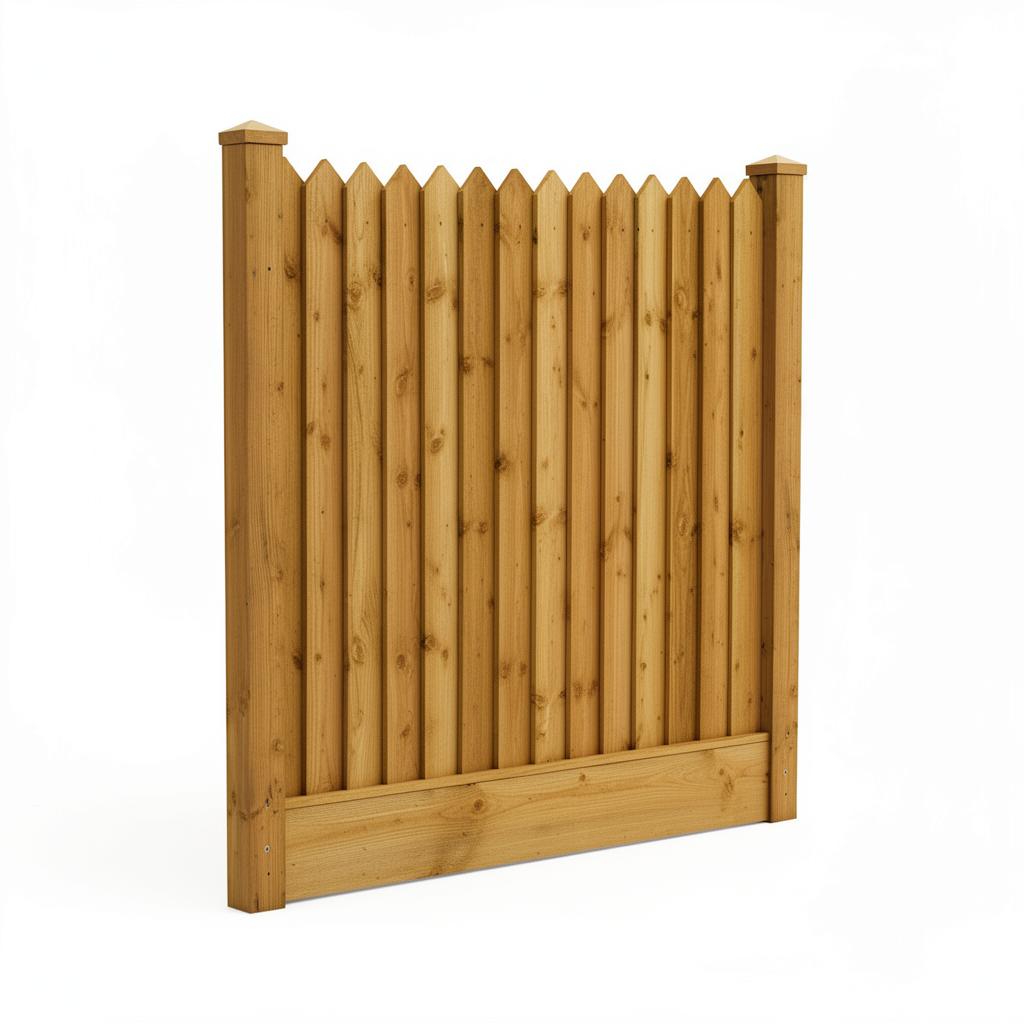

Worked example
A 20 m closeboard boundary at 1.8 m high with one pedestrian gate.
Inputs
- Fence type
- Closeboard (feather-edge)
- Run length
- 20 m
- Height
- 1800 mm
- Bay width
- 1830 mm
- Gates
- 1 pedestrian
| Step | Working | Result |
|---|---|---|
| Posts | 20 m ÷ 1.83 m bays, plus one end post and gate posts | 12 |
| Post depth | about a third of the above-ground height for 1.8 m | 600 mm |
| Post length | 1800 mm above ground + hole depth | 2,400 mm |
| Arris rails | 3 rails per bay at 1.8 m high | 33 |
| Feather-edge boards | run ÷ board cover with a 25 mm overlap | 200 |
| Concrete | 2 bags of postcrete per post hole | 24 |
| What to order | Quantity |
|---|---|
| Concrete posts | 12 |
| Post length (min) | 2,400 mm |
| Post hole depth | 600 mm |
| Arris rails | 33 |
| Feather-edge boards | 200 |
| Concrete gravel boards | 11 |
| Postcrete bags | 24 |
In short: Order 12 posts at 2,400 mm long, 33 arris rails, 200 feather-edge boards, 11 gravel boards and 24 bags of postcrete.
How to work out fencing materials
Start with the total run length of your fence. Divide it by the panel width , 1.83 m for a standard UK panel, to get the number of panels, then add one post per panel plus a final post to close the run. The calculator above also sizes gravel boards, postcrete and fixings so nothing is missed when you order.
Fencing spec guide (UK)
| Item | Guide |
|---|---|
| Standard panel width | 1.83 m (6 ft) |
| Post spacing | 1.83 m centres |
| Post depth (1.8 m fence) | ~600 mm |
| Postcrete per post | 1–2 × 20 kg bags |
Fences over 2 m (or over 1 m next to a vehicle highway) usually need planning permission. Check local rules and any boundary agreements before starting.
Pricing a full boundary job?
Set out the line and levels, take off every material and build a quote.
Frequently asked questions
- How many fence panels and posts do I need?
- Divide your run length by the panel width (1.83 m for a standard UK panel) to get the number of panels, then add one post per panel plus one to finish the run. The calculator above works this out and includes gravel boards, postcrete and fixings.
- How far apart should fence posts be?
- Set posts at the panel width, 1.83 m centres for standard 6 ft panels. Keep spacing consistent so panels drop straight into the post slots or clip neatly to the posts without gaps.
- How much postcrete per fence post?
- Allow one to two 20 kg bags of postcrete per post, depending on post size and hole depth. The calculator estimates bags from your post count so you can order in one go.
- How deep should fence posts be set?
- As a rule of thumb, set posts to a depth of about a quarter to a third of the above-ground height, typically 600 mm for a 1.8 m fence. Dig deeper for taller fences or exposed, windy sites.
- Do I need planning permission for a fence?
- In most of the UK you can build a fence up to 2 m high without planning permission, or up to 1 m if it adjoins a highway used by vehicles. Always check local rules and any conservation-area restrictions before you start.
Link to this tool
Found this useful on your site, blog or forum post? Copy the snippet below.
<a href="https://gardensurveyor.com/fence-calculator">Fence calculator: posts, panels and concrete quantities</a>